Research Articles
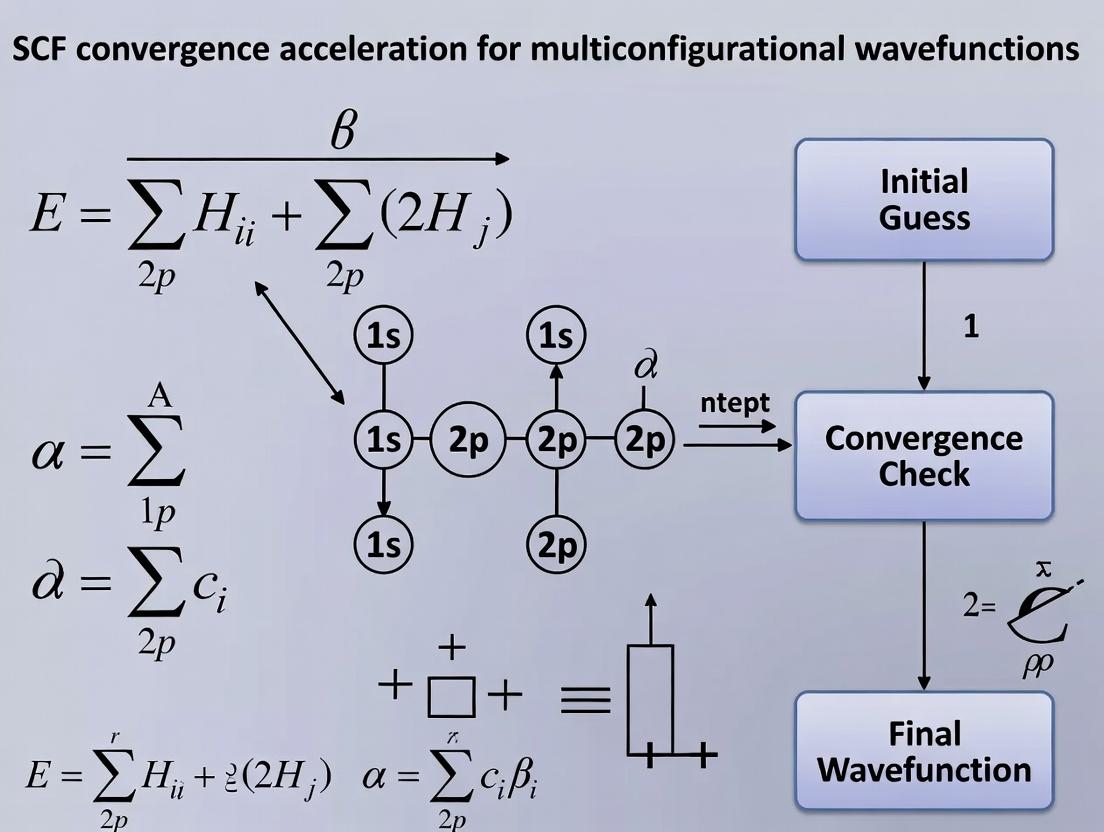
Accelerating SCF Convergence for Multiconfigurational Wavefunctions: Advanced Strategies for Computational Chemistry and Drug Discovery
This article provides a comprehensive guide to accelerating Self-Consistent Field (SCF) convergence for challenging multiconfigurational wavefunction calculations.
Beyond MP2: Unraveling π-π Stacking Interactions for Drug Discovery and Materials Science
This comprehensive review examines the application, performance, and limitations of Møller-Plesset second-order perturbation theory (MP2) for modeling π-π stacking interactions, a critical non-covalent force in biochemistry and materials.
MP2 vs DFT: Choosing the Right Quantum Method for Accurate Noncovalent Interactions in Drug Discovery
This article provides a comprehensive, up-to-date comparison of the Møller-Plesset second-order perturbation theory (MP2) and Density Functional Theory (DFT) methods for modeling noncovalent interactions, crucial in drug design and materials...
Beyond DFT: MP2 Accuracy in Predicting Stannylene-Ligand Interaction Energies for Drug Discovery
This article provides a comprehensive guide for computational chemists and drug development researchers on applying second-order Møller-Plesset perturbation theory (MP2) to predict interaction energies in tin(II) (stannylene) complexes.
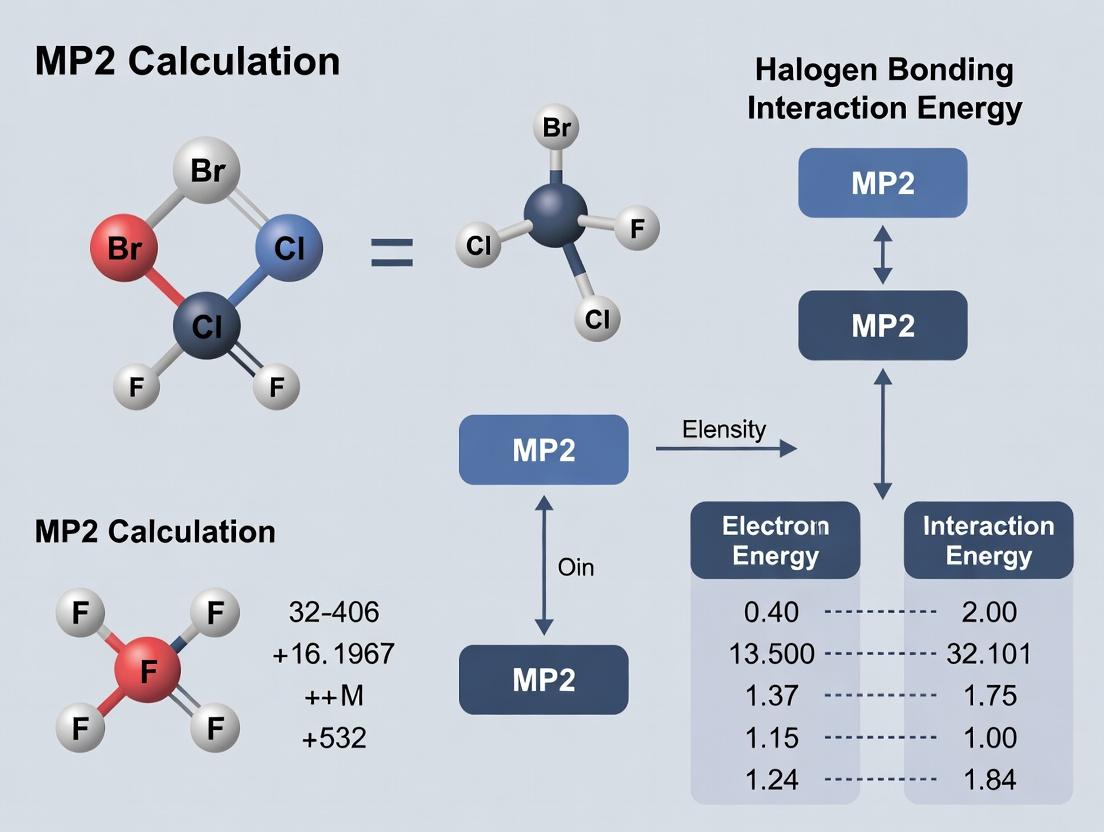
MP2 for Halogen Bonding: A Computational Guide for Accurate Drug Discovery
This article provides a comprehensive guide to using second-order Møller-Plesset perturbation theory (MP2) for calculating halogen bonding interactions, crucial in modern drug design.
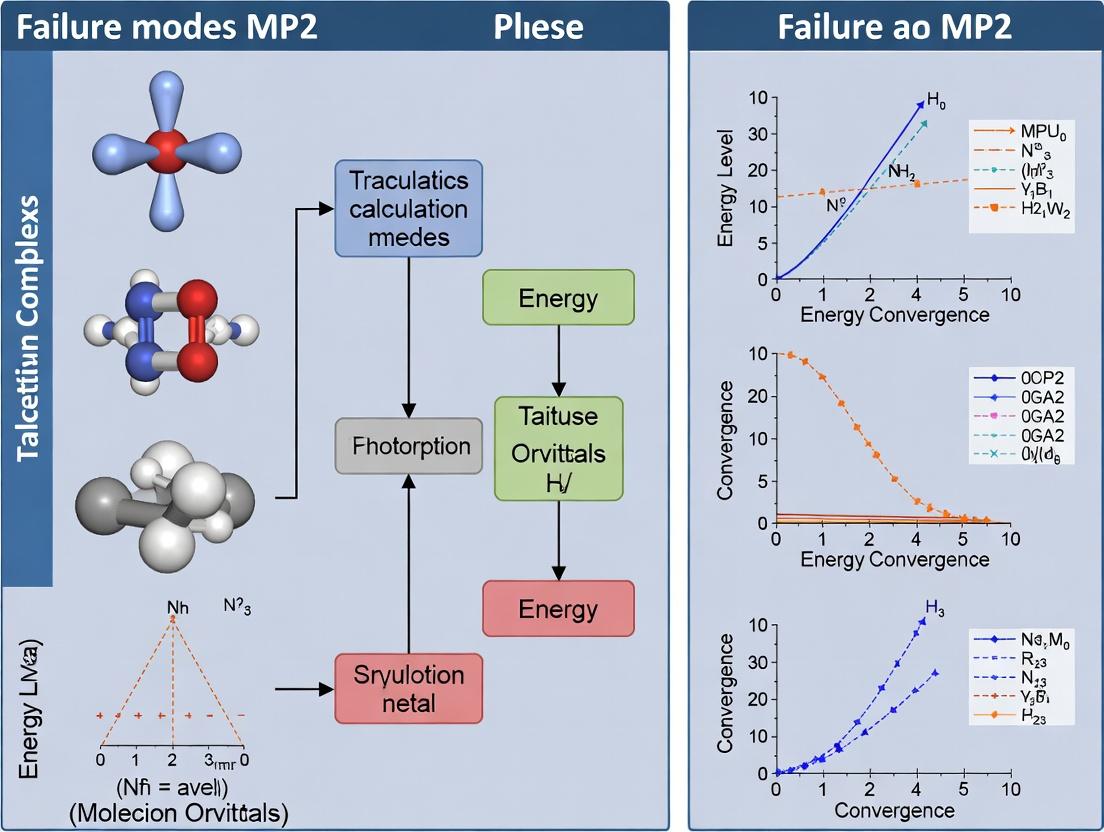
Understanding and Mitigating MP2 Failure Modes for Transition Metal Complexes in Computational Drug Discovery
This article provides a comprehensive analysis of the key failure modes and limitations of the Møller-Plesset second-order perturbation theory (MP2) method when applied to transition metal complexes, a critical challenge...
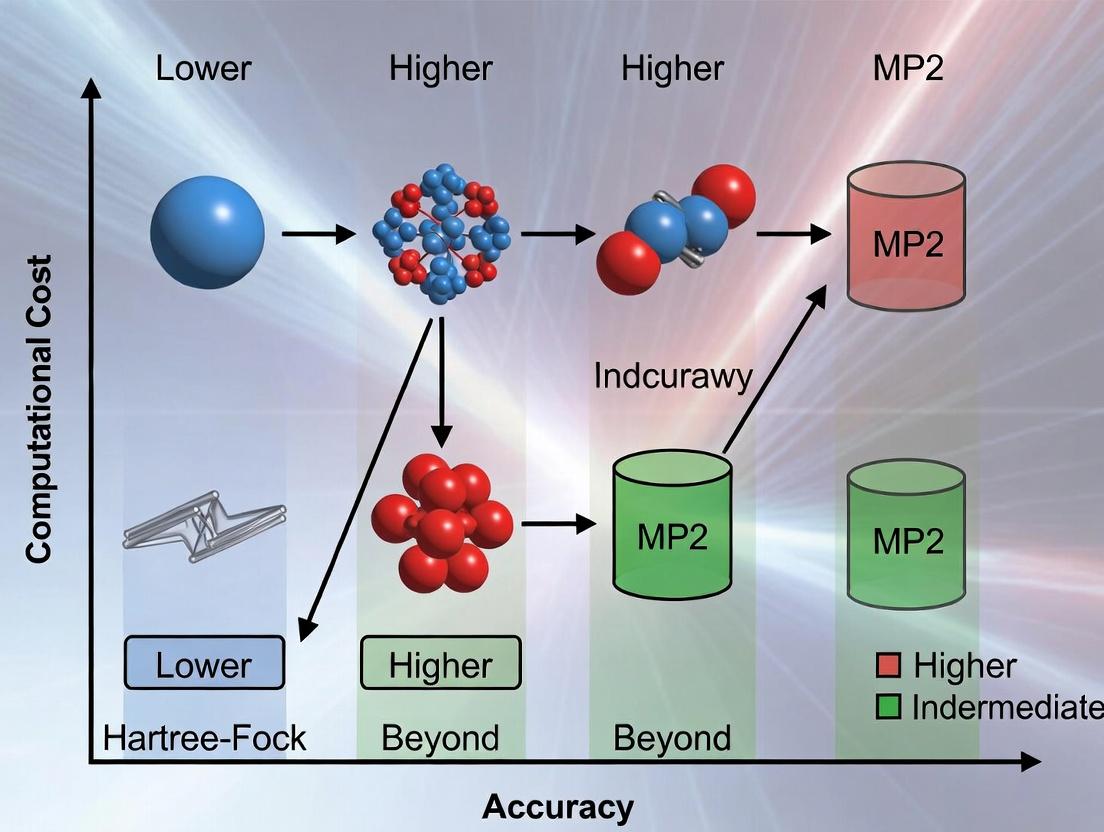
MP2 Computational Cost vs. Accuracy for Molecular Complexes: A Practical Guide for Drug Discovery Researchers
This article provides a comprehensive analysis of the trade-offs between computational cost and predictive accuracy when applying Møller-Plesset second-order perturbation theory (MP2) to molecular complexes, including protein-ligand interactions, supramolecular assemblies,...
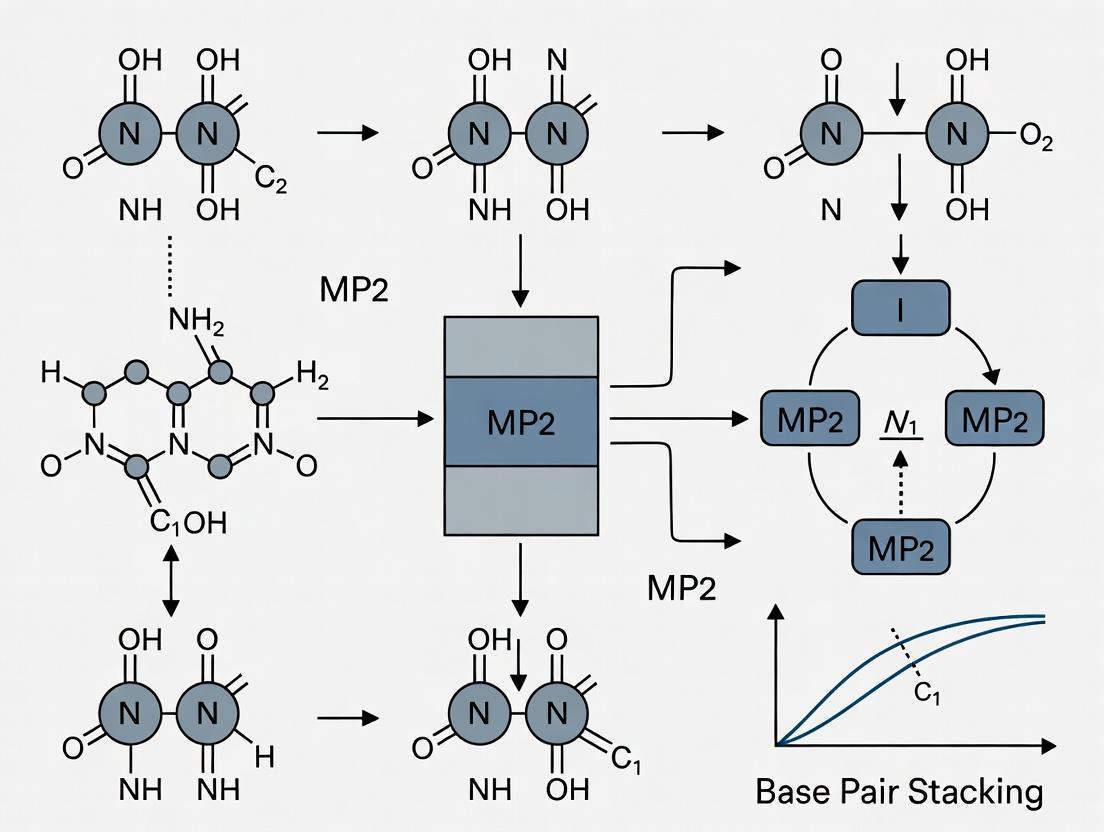
MP2 DNA Base Stacking Energy: A Computational Guide for Structural Biology & Drug Discovery
This comprehensive guide details the use of second-order Møller-Plesset perturbation theory (MP2) for calculating DNA base pair stacking interactions.
MP2 BSSE Correction: A Comprehensive Guide for Accurate Quantum Chemistry in Drug Discovery
This article provides a detailed guide to the Basis Set Superposition Error (BSSE) in second-order Møller–Plesset perturbation theory (MP2) calculations, crucial for accurate intermolecular interaction energies in drug design.
Beyond Training Data: A Comprehensive Guide to Assessing Machine Learning Interatomic Potential Transferability Across Material Classes
This article provides a systematic framework for researchers and computational scientists to evaluate the transferability of Machine Learning Interatomic Potentials (MLIPs) when applied to material classes beyond their original training...