Research Articles
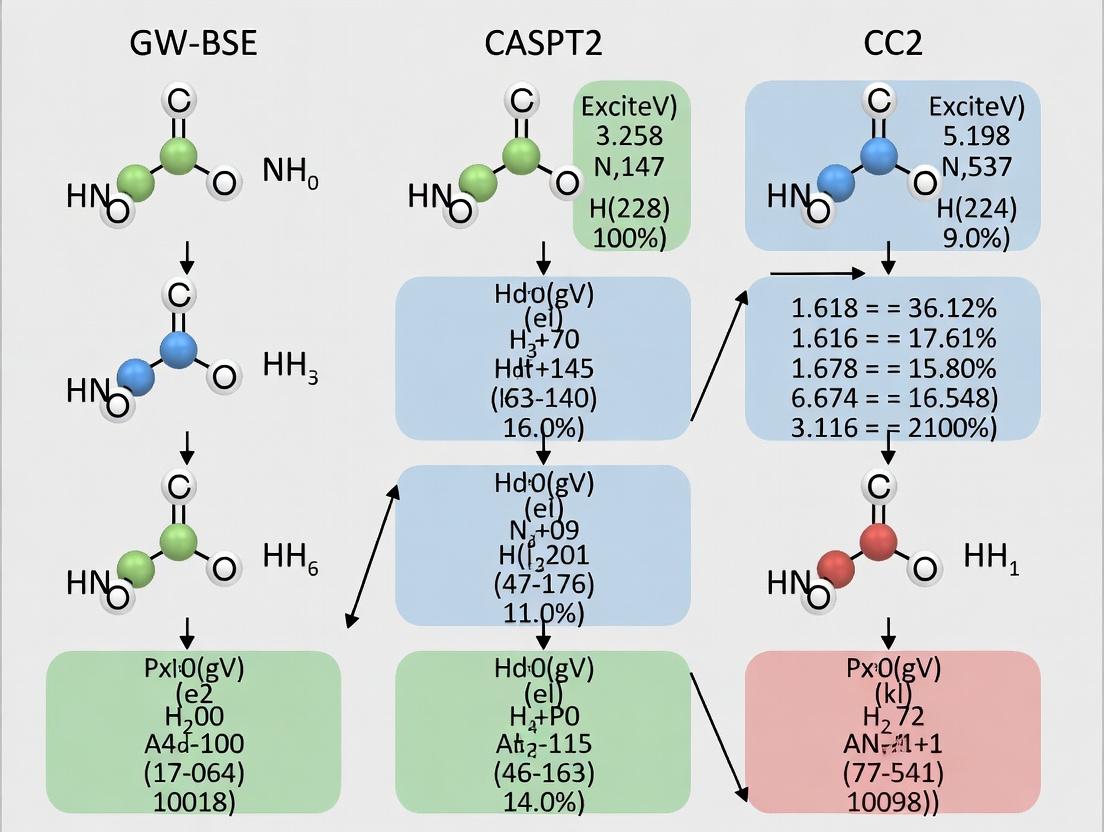
GW-BSE vs CASPT2 vs CC2: Benchmarking Excited State Energies for Drug Discovery
This article provides a comprehensive benchmark analysis of three advanced electronic structure methods—GW-BSE, CASPT2, and CC2—for calculating excited state energies.
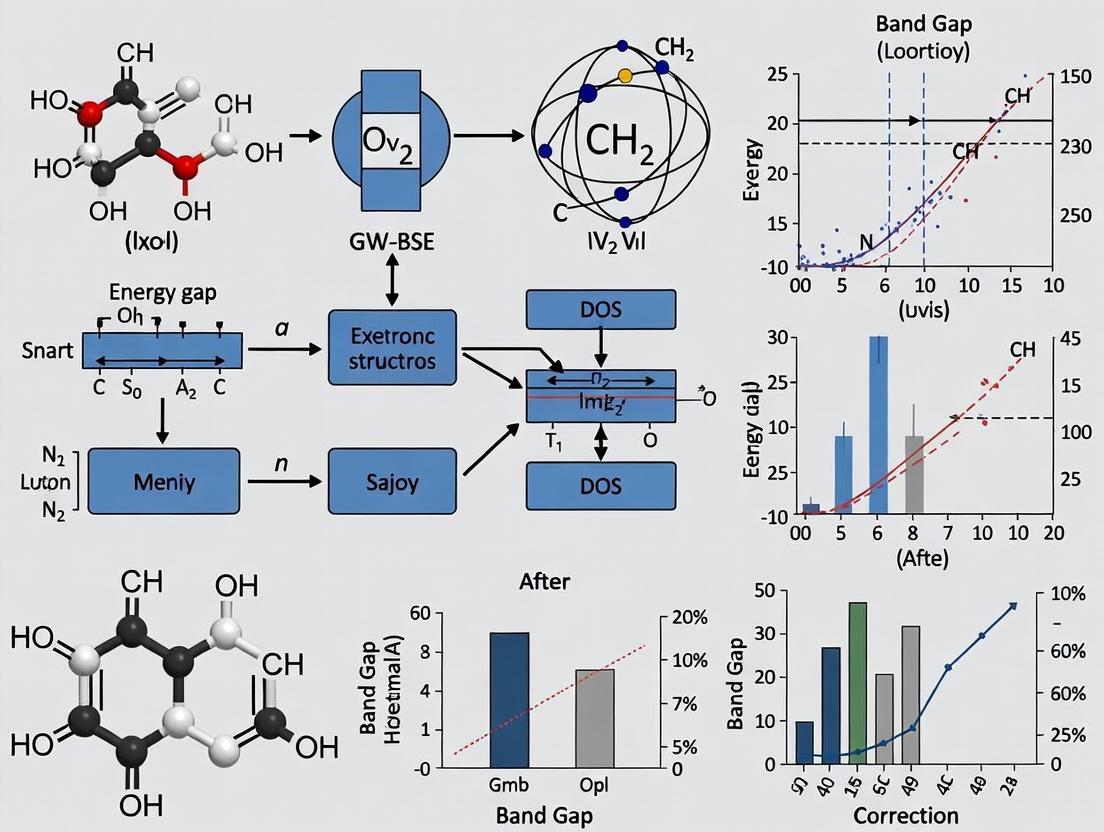
Beyond the Band Gap Blind Spot: Correcting GW-BSE Underestimation for Accurate Pharmaceutical Material Discovery
This article addresses the critical challenge of band gap underestimation in the widely-used GW approximation and Bethe-Salpeter Equation (GW-BSE) method for computational materials science.
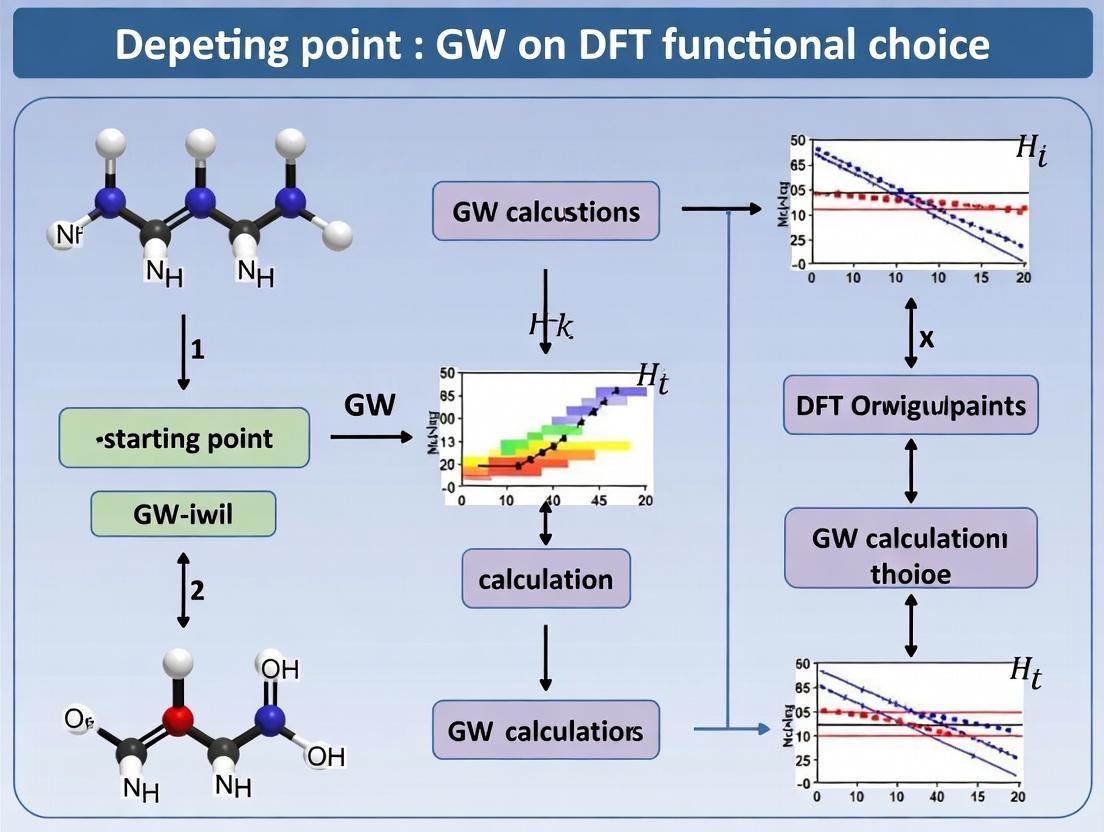
GW Starting Point Dependence: How to Choose the Right DFT Functional for Accurate Biomolecular Simulations
This article provides a comprehensive guide for researchers and drug development professionals on navigating the critical challenge of starting-point dependence in GW calculations.
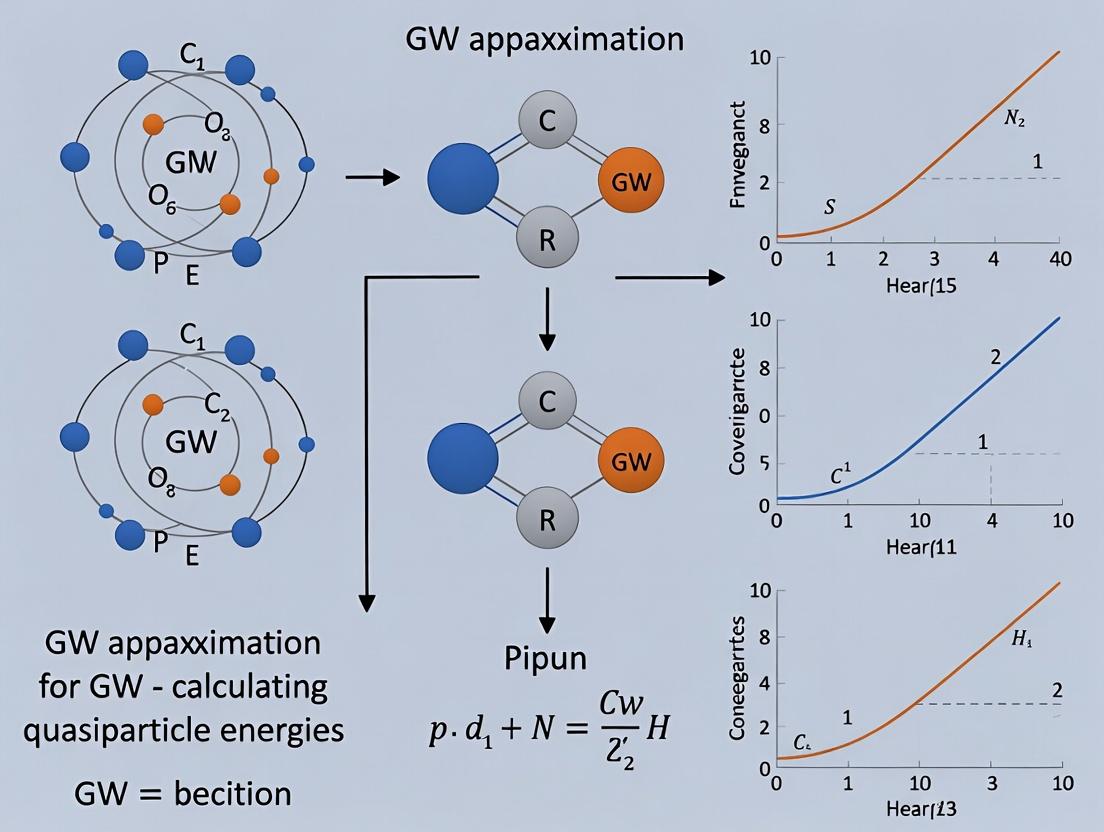
GW Approximation Explained: Calculating Accurate Quasiparticle Energies for Materials & Drug Discovery
This article provides a comprehensive guide to the GW approximation for calculating quasiparticle energies in materials science and computational chemistry.
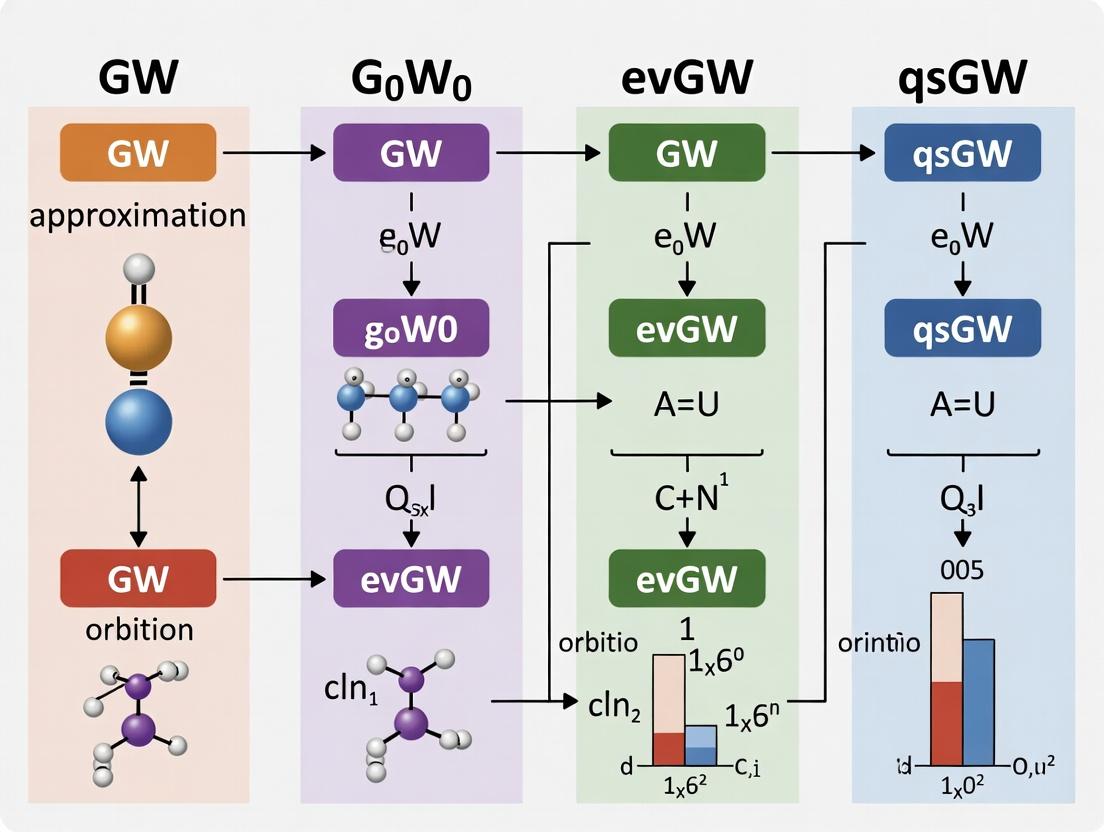
GW Approximation Decoded: A Comprehensive Guide to G0W0, evGW, qsGW, and Self-Consistency for Materials Science
This article provides a comprehensive overview of the GW approximation for quasiparticle energy calculations, with a focus on comparing the different levels of self-consistency: G0W0, evGW, qsGW, and scGW.
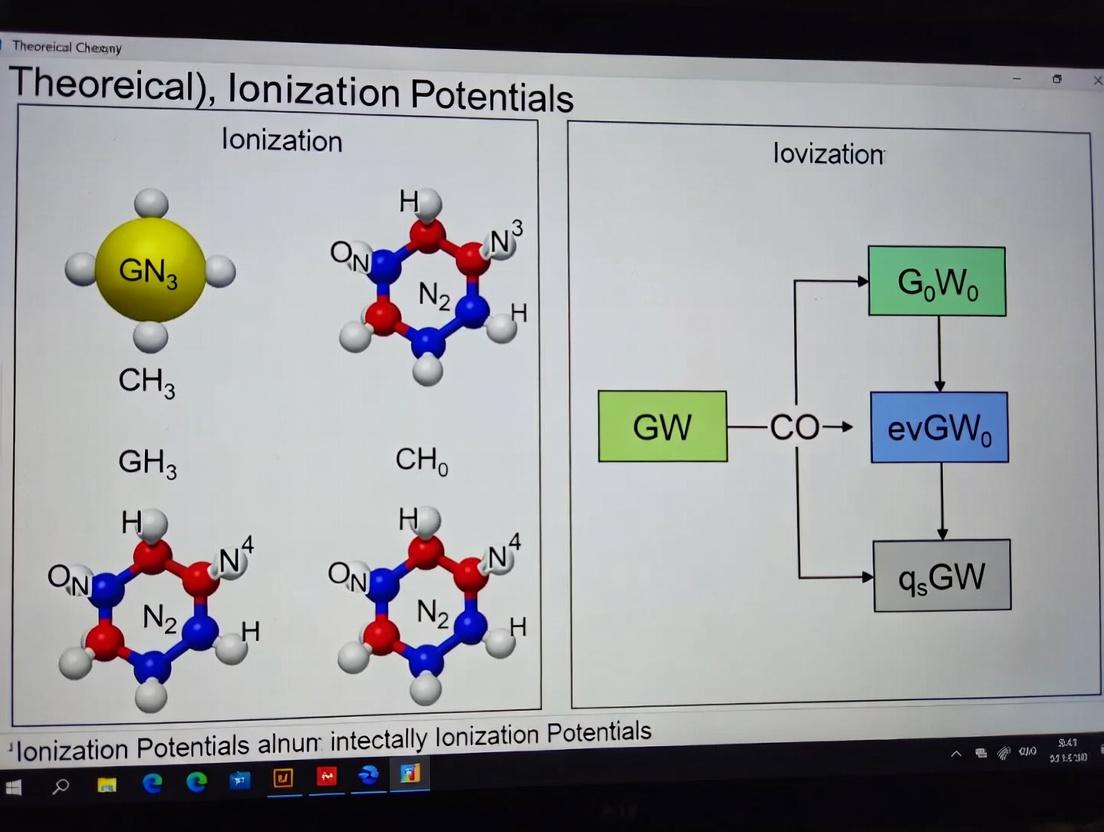
GW, G0W0, evGW, qsGW: A Comprehensive Benchmark for Accurate Ionization Potential Prediction in Molecular Systems
This article provides a detailed analysis and benchmark of four key GW approximation variants—G0W0, evGW, qsGW, and GW—for calculating molecular ionization potentials.
Level Shifting & Electron Smearing: Advanced SCF Convergence Techniques for Biomolecular Simulations
This article provides a comprehensive guide to forcing Self-Consistent Field (SCF) convergence in electronic structure calculations, with a focus on the combined use of level shifting and electron smearing techniques.
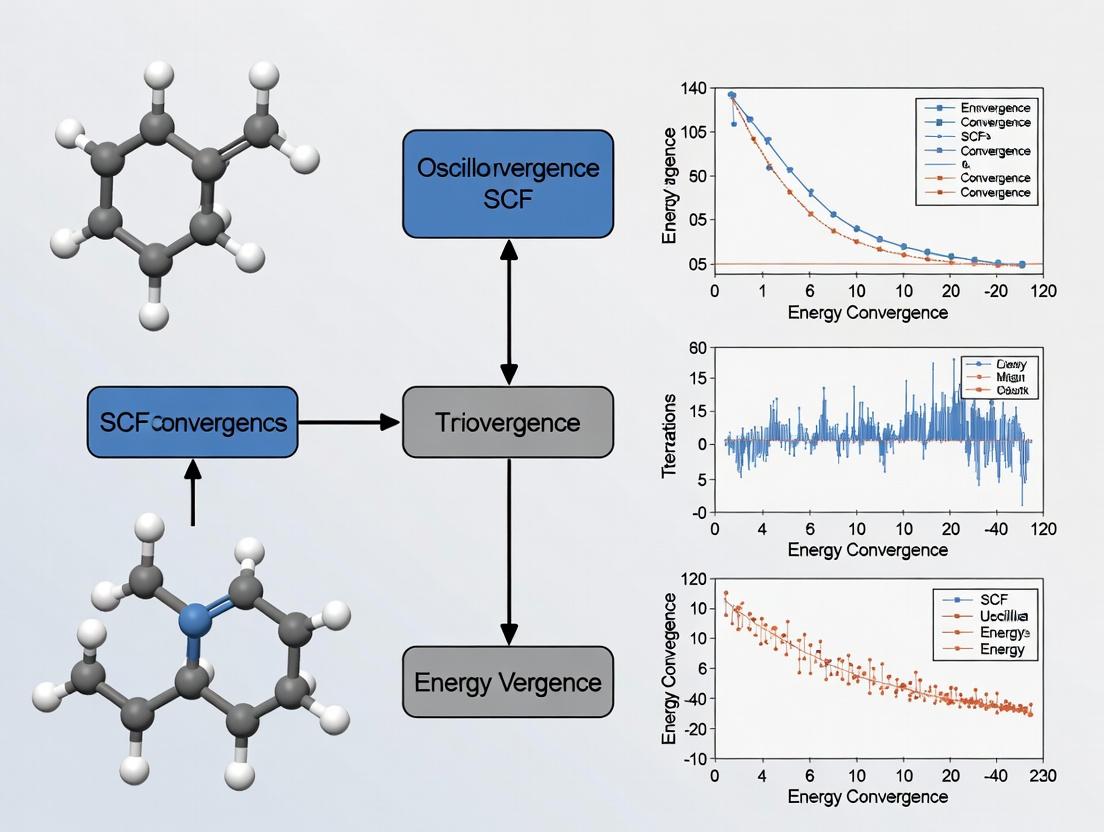
Resolving SCF Convergence Oscillations: A Comprehensive Guide for Quantum Chemistry in Drug Discovery
This article provides a systematic framework for researchers and drug development professionals to diagnose and resolve oscillating Self-Consistent Field (SCF) convergence in quantum chemical calculations.
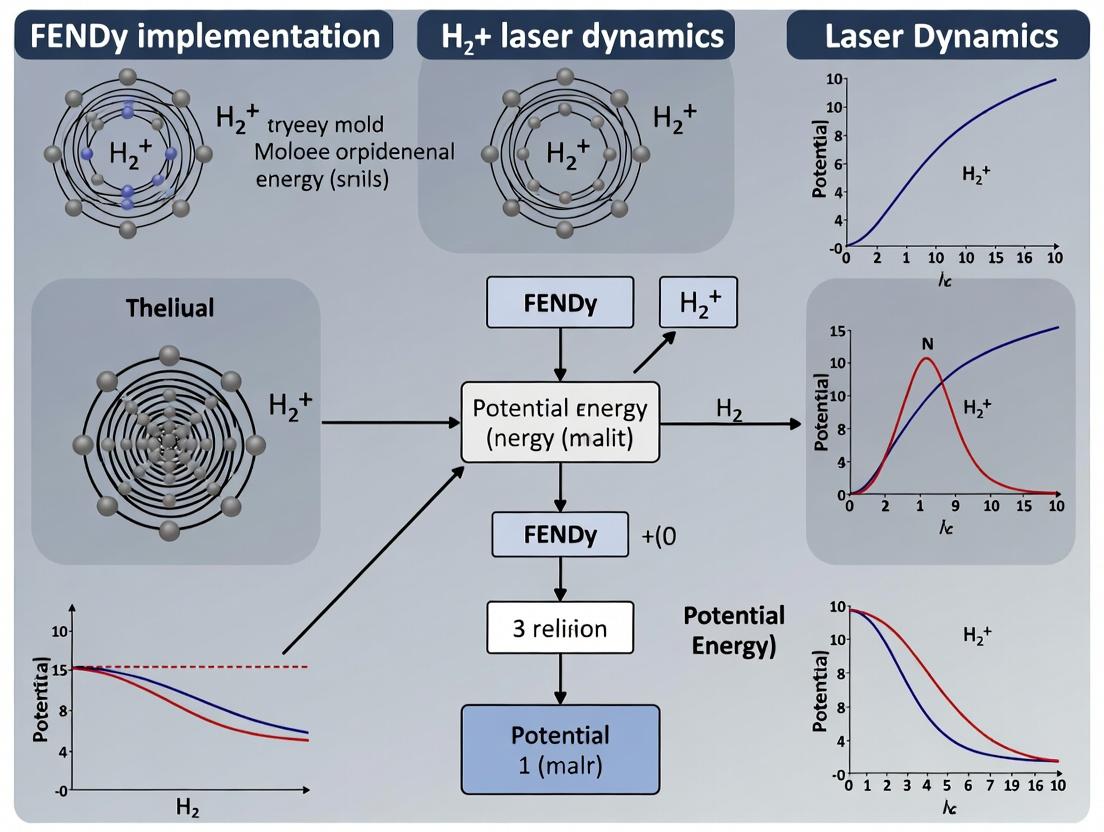
FENDy Implementation in H2+ Laser Dynamics: A Comprehensive Guide for Biomedical Researchers
This article provides a detailed examination of implementing the Frequency-Encoded Nanoparticle Dynamics (FENDy) framework within H2+ laser systems for biomedical applications.
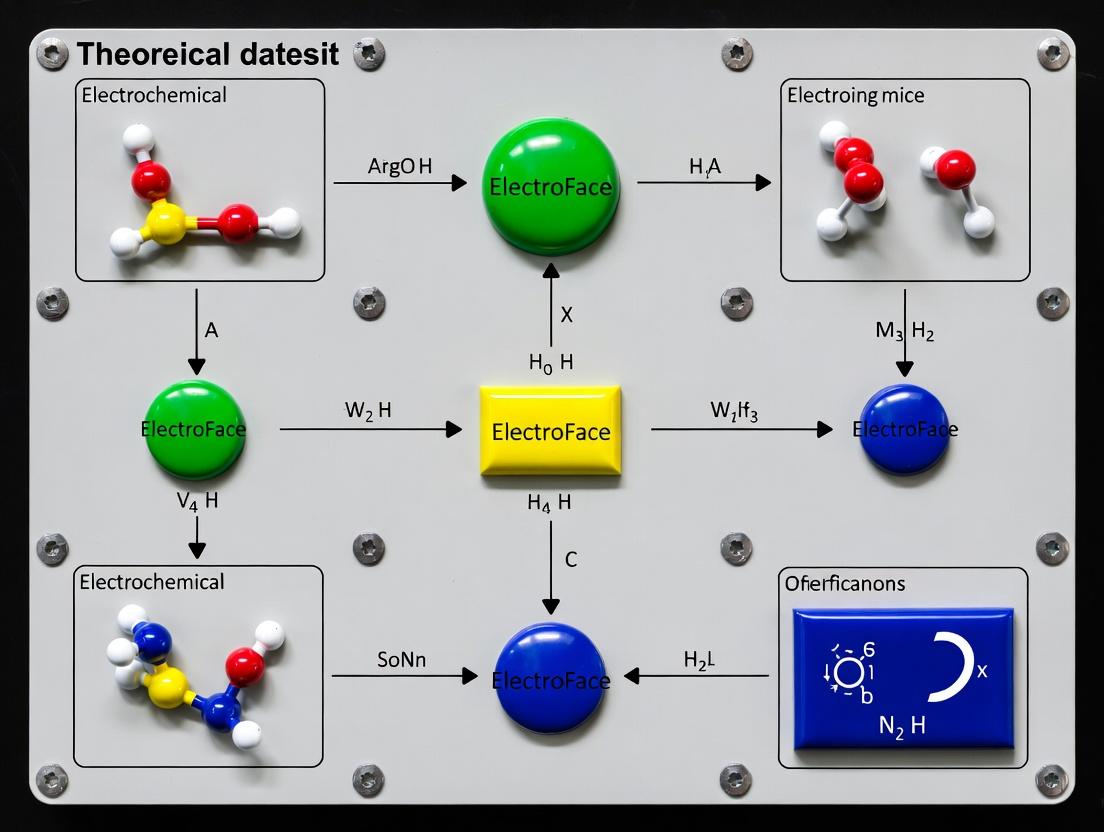
ElectroFace Dataset: A Comprehensive Resource for Machine Learning in Electrochemical Interface Research
This article provides a detailed exploration of the ElectroFace dataset, a novel and expansive resource designed to accelerate machine learning (ML) applications in electrochemical interface science.